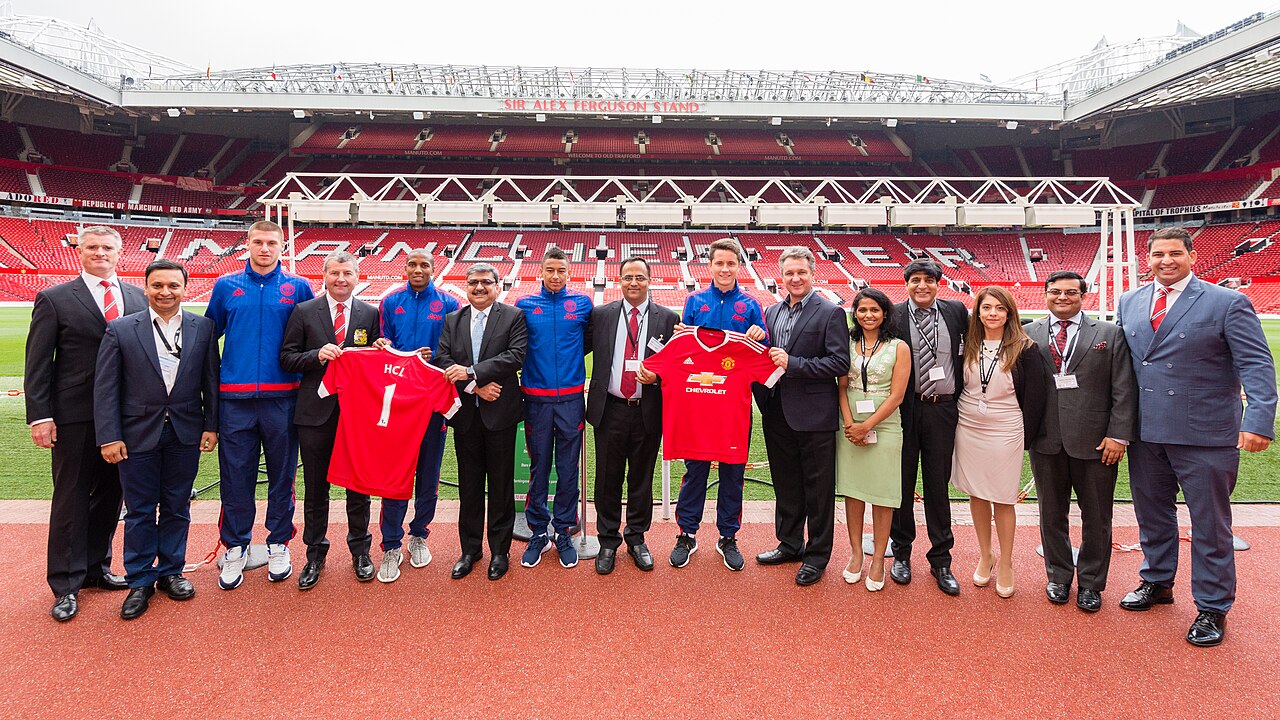
Manchester United
A century of battles for supremacy between North London's dreamers and Manchester's kings.
The rivalry between Tottenham Hotspur and Manchester United stands as one of the most enduring and intense fixtures in English football history. While not a local derby, this clash has been forged over decades by battles for league supremacy, cup finals, and the contrasting identities of two clubs that have historically defined the top tier of the game.
For Spurs fans, matches against United often represent the ultimate test of ambition—a battle between the 'Spursy' reputation of falling short and the Red Devils' historic machinery. This fixture transcends simple league positioning; it is a cultural collision between North London's romanticism and Manchester's industrial dominance, frequently deciding titles or European qualification in dramatic fashion.
- First Competitive Meeting
- September 18, 1909
- Total Meetings
- Approximately 175-180 competitive fixtures
- Major Trophy Clashes
- One major final: The 1982 FA Cup Final
Lore & Background
The roots of this antagonism stretch back to the early days of the Football League, but it truly ignited in the post-war era. As Tottenham rose to become the first club in the 20th century to win the Double (1960-61), they were often seen as the poetic challengers to the established order. Manchester United, rebuilding after the Munich air disaster and later dominating under Sir Matt Busby and Sir Alex Ferguson, represented a relentless winning machine. The rivalry was cemented in the 1980s and 1990s when both clubs were perennial title contenders, often finishing just points apart at the top of the table.
The dynamic shifted as Manchester United's 'Class of '92' era solidified their dominance, while Tottenham frequently found themselves on the outside looking in. However, the intensity never waned; every match became a statement game. For Spurs supporters, beating United is often viewed with greater significance than defeating other top rivals because it represents overcoming the club that has historically held them back from consistent league glory. The tension is palpable whenever these two giants meet, fueled by generations of near-misses and dramatic last-minute goals.
In Their Own Story
At White Hart Lane, the atmosphere shifts whenever Manchester United arrives; the air thickens with a tension that transcends the league table. For decades, victories against the Red Devils felt like titles won in themselves, rare ruptures in a narrative of near-misses. When Spurs finally pierced the defense, the roar wasn't merely for three points—it was a release of generations of frustration, turning a single match into a cultural triumph where North London's ambition briefly silenced Manchester's machinery.
Reader's Guide
This rivalry originated not from geography, but from the struggle for English football's throne. As two of the most successful clubs in history, their paths have crossed frequently in title races and cup semi-finals. The first major flashpoint occurred in the early 1900s, but the modern era of intense competition began in the 1960s when Spurs won the Double under Nicholson while United were reassembling from Munich before reclaiming domestic dominance.
Did You Know?
- Tottenham Hotspur were the first club in the 20th century to win the League and FA Cup Double (1960-61), setting a benchmark that Manchester United would later match.
- While they have rarely met in major cup finals, their head-to-head encounters often decide league positions or European qualification, with high stakes defining every fixture. Notably, they have only ever met once in a m
- Sir Alex Ferguson famously referred to Tottenham as 'the team of the season' on several occasions when they challenged for the title in the early 2000s and 1993-94 campaign.
- Historically, matches between these two have produced some of the highest-scoring games in Premier League history, reflecting their shared attacking DNA.
Managerial Turmoil and Tactical Shifts
The 2019–20 campaign began with significant instability for Tottenham Hotspur, marked by a dismal start in the Premier League where only three victories were secured from the opening twelve matches. This poor form was compounded by an embarrassing early exit from the EFL Cup against Colchester United, leading to the dismissal of long-serving manager Mauricio Pochettino on November 19, 2019. The club immediately appointed José Mourinho as his successor, signaling a drastic change in direction just weeks into the new year. Despite this high-profile appointment, the team struggled to find consistency throughout the season. Their attacking output was notably lethargic, recording the fewest shots taken since Opta began tracking such data in 1997–98. The transition period under Mourinho was further complicated by controversial officiating decisions involving Video Assistant Referee (VAR) technology, which disallowed legitimate goals and denied penalties, adding to a season defined by frustration and unfulfilled potential.
The Pandemic Interruption and Restart
Global health concerns dramatically altered the trajectory of Tottenham's 2019–20 season when the COVID-19 pandemic forced the postponement of all Premier League matches in March. This suspension initially extended until late April but was later pushed indefinitely, creating an uncertain hiatus for the squad. During this break, several high-profile fixtures, including a crucial match against Manchester United and another versus West Ham, were delayed. The competition eventually resumed on June 19, with Tottenham hosting Manchester United at their new home ground. This restart fixture ended in a 1–1 draw, featuring a goal from Steven Bergwijn, serving as the first competitive test for the team after months of inactivity. The interruption disrupted momentum and rhythm, forcing players to adapt quickly upon return while navigating the unique challenges of playing behind closed doors or with limited attendance due to safety protocols.
Cup Competitions and Dramatic Exits
Tottenham's journey through domestic cup competitions was fraught with difficulty and narrow escapes during this turbulent season. In the FA Cup, the team faced repeated hurdles, requiring replays twice just to advance past the early rounds. Their campaign ultimately ended in a dramatic fashion at the fifth round against Norwich City. After a hard-fought contest that stretched into extra time and finished level at 1–1, the match was decided by a penalty shootout. Despite their efforts, Tottenham lost 3–2 on penalties, marking another disappointing exit from major silverware contention. Similarly, their EFL Cup run ended prematurely in the early stages against Colchester United, highlighting a lack of depth or focus in knockout tournaments. These results underscored a broader theme of inconsistency that plagued the squad across all fronts throughout the year.
New Stadium Era and Media Documentation
This season marked a historic milestone for Tottenham Hotspur as it was their first full campaign playing at the newly constructed Tottenham Hotspur Stadium, following a period where they utilized Wembley Stadium for most matches. The move to their permanent home represented a significant step forward in the club's infrastructure and identity. Beyond the pitch, the entire season was meticulously documented by Amazon Prime Video through their 'All or Nothing' series, offering fans an unprecedented behind-the-scenes look at the squad's struggles and triumphs. Pre-season preparations included participation in prestigious tournaments like the International Champions Cup in Asia and the Audi Cup in Munich, where they defended their title. Despite these high-profile engagements and the excitement surrounding their new venue, the on-field results often fell short of expectations, creating a stark contrast between the club's ambitious off-pitch developments and their challenging competitive reality.
Gallery